In Estonia’s changeable climate, one of the most important decisions when buying a sauna house is whether to choose an insulated or uninsulated building. This choice determines whether you can enjoy your sauna in every season and how costly and time-consuming heating the building will be.
What’s the difference between an insulated and an uninsulated sauna house?
Saunas with a thinner timber structure are designed mainly for summer use. When cold weather arrives, such a building cools down quickly and heating it becomes uneconomical. A fully insulated sauna house, with proper insulation in the walls, floor and roof, reliably keeps the heat in even in the harshest frost.
Benefits of an insulated sauna house
What are the main reasons to choose an insulated solution?
- Year-round use: The sauna can be used in cold winters too, not just in the warm season.
- Lower heating costs: Proper insulation keeps the heat in, so heating takes less firewood and time.
- Faster warm-up: As heat doesn’t escape through the walls, the steam room reaches the desired temperature faster.
- Longer service life: Insulation and a solid structure protect the materials from moisture and temperature fluctuations, extending the life of the sauna house.
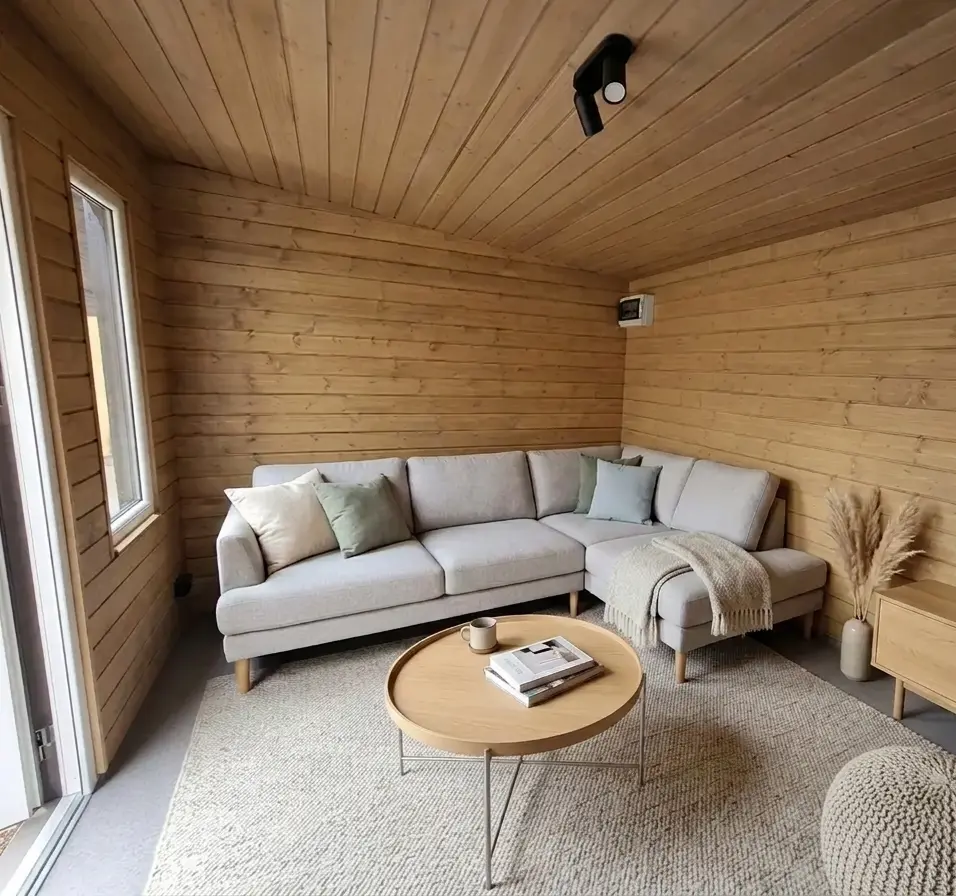
- Comfort: A warm front room and stable temperature make your sauna visit enjoyable in every season and offer cosy relaxation after the steam, too.
How is a fully insulated sauna house built?
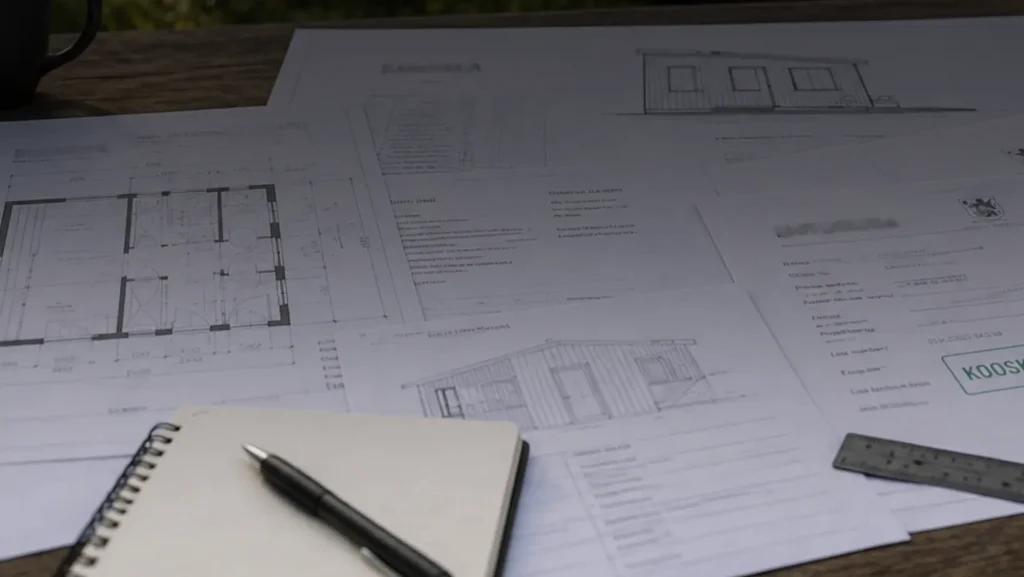
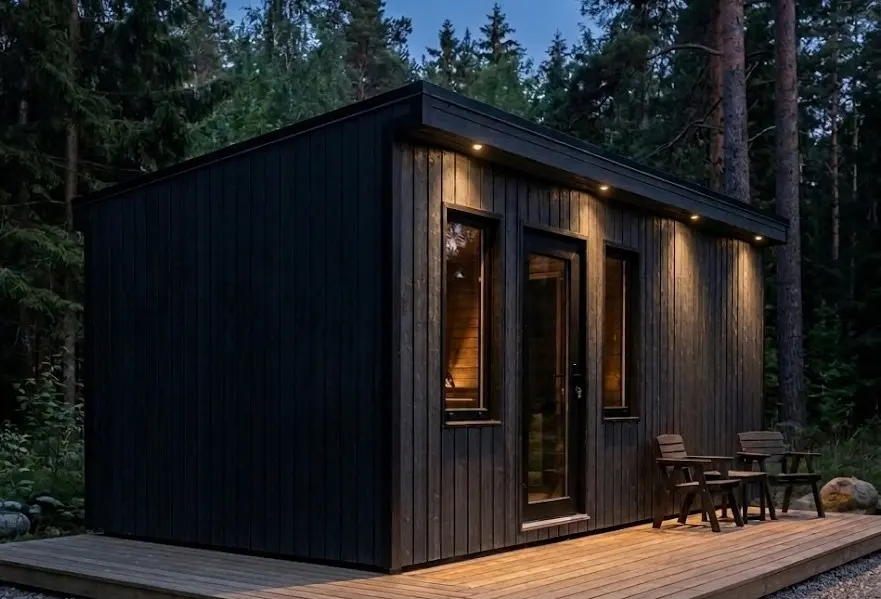
In a fully insulated sauna house, the walls, roof and floor are insulated with closed-cell PUR foam, which is moisture-resistant and retains its insulating properties for years. The roof is covered with quality sheet metal, and the sauna house is clad in wood inside and out, giving it the feel and scent of a traditional sauna. If the footprint of a fully insulated sauna house is under 20m², you may not need a building permit or building notice at all – read more in our article on sauna house building permits.
Does an insulated sauna house pay off?
Although the initial investment in a fully insulated sauna house is higher than for a simpler summer sauna, it pays off in the long run: lower heating costs, more months of use per year and a more durable structure reduce later maintenance and repair costs. Anyone who wants to enjoy the sauna in autumn, winter and spring – not just for a few summer months – will benefit most from an insulated solution. If you need help choosing a sauna house, also read our guide to choosing a sauna house.
Frequently asked questions
Does an insulated sauna house need special maintenance?
No, the maintenance needs are similar to those of an ordinary timber building: check the condition of the wood and roof from time to time and treat wooden surfaces when needed. Proper insulation and a metal roof reduce the risk of moisture damage, so typical maintenance tends to be needed less often than with an uninsulated sauna.
Does an insulated sauna house heat up more slowly than an ordinary sauna?
Quite the opposite. Because an insulated building doesn’t let heat constantly escape outside, the steam room reaches the desired temperature faster and stays warm longer than in saunas with a lighter structure.
Is an insulated sauna house suitable for winter use?
Yes, that’s the greatest value of a fully insulated sauna house. The whole building, including the front room, stays pleasantly warm even in cold winter, giving you a complete sauna experience in every season.
Ready for your own sauna house?
Browse our products or ask for personal advice on what suits your needs best.